
Blog
What Are Bagasse Plates? A B2B Buyer’s Guide

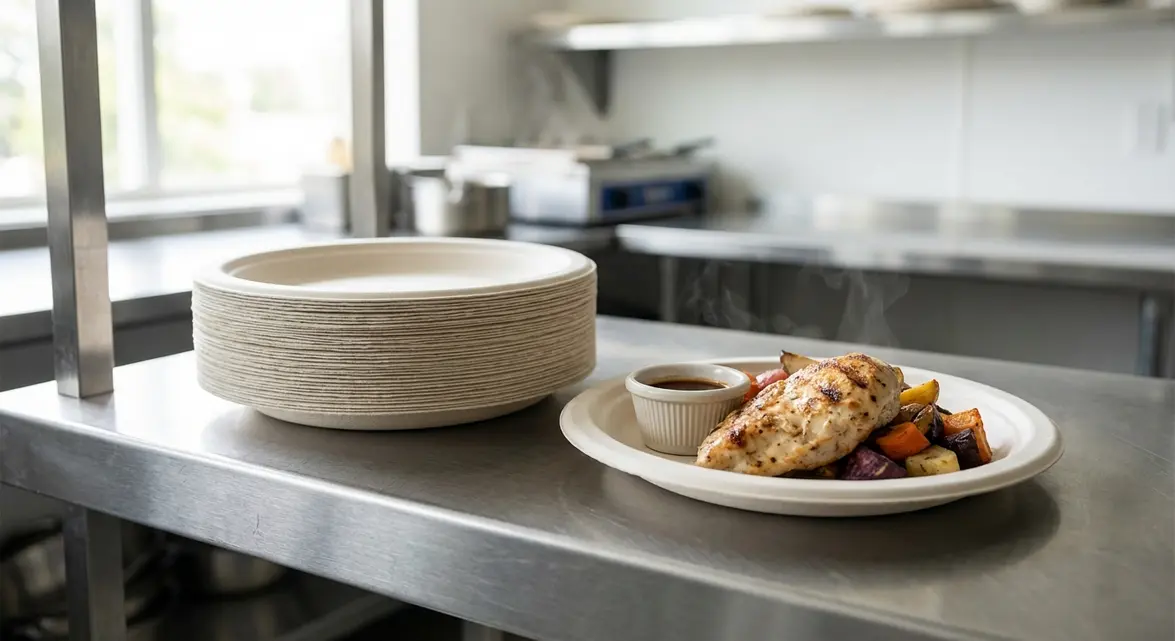
What are bagasse plates, and why are so many restaurants, caterers, food manufacturers, and distributors switching to them? Bagasse plates are disposable plates made from sugarcane “bagasse”—the fibrous pulp left after sugarcane juice is extracted. Instead of being burned or wasted, this byproduct is cleaned, pulped, and molded into sturdy tableware that performs like traditional disposable plates but aligns better with modern sustainability and compliance goals.
For B2B buyers, the value is practical: reliable heat resistance, grease resistance, and stack strength—plus growing customer preference for fiber-based alternatives to petroleum plastics. But procurement success depends on getting the details right: material composition, certifications, compostability claims, barrier coatings, sizing, packaging, and supply continuity.
This guide breaks down everything a professional buyer needs to know: what are bagasse plates made of, how they perform, what “compostable” really means across markets, how they compare to corn starch and other materials, and how to specify them correctly in a tender or RFQ.
What Are Bagasse Plates? (Definition and Material Basics)
What are bagasse plates in simple terms? They are disposable plates formed from sugarcane bagasse fibers. After sugar mills extract sugarcane juice, the remaining pulp is:
- Collected as an agricultural byproduct (not a newly grown crop for packaging)
- Washed and refined to remove impurities
- Pulped into a fiber slurry
- Molded under heat and pressure into plate shapes
- Dried and finished for food-contact use
Because bagasse is a fiber material, bagasse plates are commonly described as molded fiber tableware or sugarcane pulp plates. They’re typically off-white or natural white, with a slightly textured surface that feels more “paper-like” than plastic—yet far stronger than standard paper plates.
How Bagasse Plates Are Made (Molding Process, Additives, and Quality Control)
Understanding the manufacturing process helps buyers evaluate quality, pricing, and performance consistency—especially across multiple SKUs.
1) Pulp preparation and fiber quality
Higher-quality bagasse plates start with well-processed pulp:
- Low ash content helps with strength and appearance
- Consistent fiber length improves rigidity and edge integrity
- Proper washing reduces odor and improves food-contact suitability
2) Thermoforming / hot-press molded fiber
Most premium plates use a hot-press process where fiber is compressed in heated molds. This creates:
- Smoother surface and better stiffness
- More precise dimensions for lid compatibility and automated packing
- Improved grease and moisture resistance compared with lower-density molded pulp
3) Additives and coatings: what to ask suppliers
Many buyers assume fiber plates are “chemical-free.” The reality is more nuanced. Bagasse plates may use processing aids or surface treatments depending on performance targets.
Key questions to include in your supplier questionnaire:
- Is the product PFAS-free (no intentionally added fluorinated grease-resistant chemicals)? Provide test reports if required by your market.
- Is there any plastic coating (PE/PP) or bioplastic coating (PLA)? If yes, does it affect compostability certification?
- Are there bleaching agents used? If whitened, what process is used and does it comply with food-contact rules?
- Are colorants or inks used (for printed rims or branding)? Are they food-safe and compostable-friendly?
For many regulated markets, “bagasse” alone isn’t enough. Compliance is usually determined by documented tests, declarations, and third-party certifications.
Performance: What Bagasse Plates Do Well (and Where They Don’t)
From a B2B standpoint, performance determines repeat orders. Here’s how bagasse plates generally perform in foodservice environments.
Strength and rigidity
Bagasse plates are known for good rigidity and stack strength—especially in heavier grammages and hot-press versions. They handle:
- Hot entrées and combo meals
- Greasy foods (burgers, fried items, pizza slices)
- Buffet service and catering lines
Heat and cold tolerance
Bagasse plates typically tolerate hot foods well and are suitable for chilled items too. In many commercial settings they can be used for:
- Hot service (steam tables, takeout counters)
- Cold desserts and salads
Important: If you plan to microwave bagasse plates, specify microwave suitability and request test evidence. Performance varies by thickness, moisture content, and additives.
Moisture and grease resistance
High-density bagasse plates provide good resistance for most typical service times. However, like all fiber products, extended exposure to liquids can eventually soften the structure.
Where bagasse plates may not be ideal:
- Long-duration soaking (soupy dishes left for extended periods)
- Very oily foods held under heat lamps for long holding times
- High-acid foods over extended times if the plate is thin or low-quality
For these edge cases, buyers often choose higher-weight SKUs, partition plates with reinforced ribs, or alternative materials for specific menu items.
Compostability Explained: What B2B Buyers Need to Verify
One of the top reasons buyers ask what are bagasse plates is because they’re marketed as “compostable.” In practice, compostability is a claim that must match the local infrastructure and certification standards.
Industrial vs. home composting
- Industrial composting: Many bagasse plates are designed to break down in controlled composting facilities with managed heat, moisture, and microbial activity.
- Home composting: Some fiber products may break down at home, but conditions vary dramatically. If you need home-compostable claims, seek explicit certification or local regulatory guidance.
Common certifications and documents to request
Depending on your target market, ask for relevant certifications and supporting paperwork:
- ASTM D6400 / D6868 (often referenced for compostable plastics and coated items)
- EN 13432 (EU compostability standard for packaging)
- Food-contact compliance declarations applicable to your region (e.g., EU framework requirements, US FDA-related supplier declarations, etc.)
- PFAS testing or declarations where required
- Heavy metals and overall migration testing (especially for printed or coated items)
Procurement tip: Request documents per SKU, not only per “material.” A 9-inch plate and a 3-compartment plate may have different coatings, suppliers, or process controls.
Bagasse Plates vs. Other Disposable Materials (Corn Starch, Paper, Plastic, PLA)
Once you understand what are bagasse plates, the next step is knowing when to specify them versus alternatives.
Bagasse vs. traditional paper plates
- Strength: Bagasse is typically sturdier than basic paper plates.
- Grease resistance: Often better without heavy plastic coatings.
- Premium feel: More “restaurant-grade” for many operators.
Bagasse vs. plastic (PP/PS/PET)
- Heat performance: Many bagasse plates handle hot foods well without warping like thin plastics.
- End-of-life narrative: Fiber-based products can align with composting programs and fiber recovery messaging, subject to local rules.
- Appearance: Plastic can be clearer and glossier; bagasse is more natural and opaque.
Bagasse vs. PLA-coated or bioplastic items
PLA (polylactic acid) is a bioplastic often used in compostable cups and coatings. For plates, many buyers prefer uncoated molded fiber to avoid plastic-like layers. If coatings are used for high-performance applications, verify compostability certifications and local acceptance.
Bagasse vs. disposable corn starch tableware
Corn starch tableware (often blended biopolymers) can offer a different performance profile:
- Surface feel: Often smoother and more plastic-like.
- Form factor: Can be suitable for certain molded shapes and thin-wall designs.
- Heat limits: Some corn starch blends have more specific temperature constraints.
For many foodservice buyers, bagasse plates are the “default” fiber solution for hot meals, while corn starch options are selected where a plastic-like aesthetic or certain molding requirements are prioritized.
Common Bagasse Plate Types and Specifications (What to Put in Your RFQ)
To source successfully, translate “bagasse plate” into measurable specs. Here are the most common types and what matters for each.
Round plates (6″, 7″, 9″, 10″)
- Use case: General dining, catering, cafeterias
- Key specs: Diameter tolerance, rim height, weight (gsm or grams per piece), stack count per sleeve/carton
Square plates
- Use case: Premium catering presentation
- Key specs: Corner strength (to prevent soft corners), flatness, warpage control
3-compartment / partition plates
- Use case: Meal combos, institutional dining, airlines/rail
- Key specs: Compartment depth, leak resistance between compartments, rib reinforcement, lid compatibility (if applicable)
Key performance specs to request
High-performing B2B procurement teams ask for a spec sheet that includes:
- Basis weight / piece weight (helps compare real strength across suppliers)
- Heat tolerance guidance (hot food, microwave, oven—if claimed)
- Oil resistance or kit test data (if available)
- Drop/stack tests for logistics and warehouse handling
- Moisture content range (affects brittleness and warpage)
Food Safety and Compliance: What Buyers Should Validate
“Eco-friendly” doesn’t replace “compliant.” If you are selling into regulated channels—QSR chains, airlines, public institutions, export markets—your supplier’s documentation matters as much as the plate itself.
Food-contact documentation
Ask your supplier for:
- Declaration of Compliance (region-specific)
- Overall migration and specific migration results where relevant
- Traceability statement for raw materials and production batches
PFAS and “forever chemicals” considerations
Some jurisdictions restrict intentionally added PFAS in food packaging. If you’re buying bagasse plates for those markets, include:
- PFAS-free declaration (and whether it is based on non-intent statement or analytical testing)
- Third-party lab reports using methods accepted in your region (where required)
Odor, taste, and aesthetics
Buyers should run practical trials, especially for sensitive foods (desserts, mild-flavor dishes). Evaluate:
- Off-odor when hot food is served
- Surface linting or fiber shedding
- Color consistency across lots (important for branded programs)
Cost Drivers and How to Buy Bagasse Plates at Scale
Bagasse plates can be cost-competitive, but unit price depends on more than diameter. Major cost drivers include:
- Weight and thickness: Heavier plates cost more but reduce failure rates and customer complaints.
- Molding process: Hot-press is often higher cost than basic molded pulp but delivers better performance.
- Packaging configuration: Retail-ready sleeves, branded cartons, barcodes, and labeling add cost.
- Certifications and testing: Third-party validation can affect lead time and pricing.
- Freight and Incoterms: Carton cube, palletization, and shipping terms influence landed cost.
RFQ checklist for distributors, importers, and large operators
- SKU list (sizes, compartments, color, packaging)
- Target annual volume and delivery schedule
- Required certifications (compostability, PFAS-free, food-contact docs)
- Sample and trial plan (kitchen testing, customer feedback)
- Quality agreement (AQL, tolerances, corrective action process)
- Contingency plan (backup molds, second production line, safety stock)
Storage, Handling, and Shelf-Life in Warehouses and Foodservice
Because bagasse plates are fiber-based, storage conditions affect performance. For best results:
- Keep cartons dry and off the floor (use pallets and shrink wrap appropriately).
- Avoid high humidity to reduce warpage and softening.
- Avoid extreme dryness which can increase brittleness and cracking.
- Rotate inventory (FIFO) and track lot codes for traceability.
If you distribute across climates, request guidance on recommended storage ranges and container loading best practices.
Use Cases: Where Bagasse Plates Deliver the Best ROI
Knowing what are bagasse plates is helpful, but knowing where they shine is what drives smart purchasing. Typical high-ROI applications include:
- QSR and fast-casual: Strong for burgers, fries, hot bowls, and combo plates.
- Catering and events: Premium look, reliable handling for guests.
- Corporate cafeterias and institutions: Consistent portioning, compatible with sustainability policies.
- Food trucks: Durable in mobile environments; less risk of plate collapse.
- Airlines/rail (selected SKUs): Partition plates for meal components where weight and space are managed carefully.
How to Evaluate Samples (A Practical Test Plan for Buyers)
Before committing to a container load or a multi-site rollout, run standardized tests. A simple, repeatable sample evaluation can reduce returns and improve customer satisfaction.
Suggested internal tests
- Hot oil test: Serve fried food and observe staining/softening after 15, 30, 45 minutes.
- Cut resistance: Use plastic cutlery and evaluate fiber tearing and surface fuzzing.
- Load test: Place a weighted meal and carry with one hand to assess flex.
- Stack test: Stack 50–100 plates and assess deformation over time.
- Microwave test (if relevant): Heat for set intervals and observe warpage/odor.
What “good” looks like
- No soggy bottom under typical service times
- Clean rim and edges with minimal cracking
- Consistent plate-to-plate thickness and fit in dispensers
- Minimal odor when hot food is served
Sourcing and Supply Chain Considerations (Lead Times, MOQs, and Risk)
Bagasse is an agricultural byproduct, so seasonality and regional production can influence pulp availability. Professional sourcing should account for:
- MOQ and tooling: Standard molds reduce lead time; custom shapes may require new tooling and longer development.
- Lead times: Factor in production scheduling, packaging procurement, and freight.
- Quality consistency: Ask about in-line QC, mold maintenance, and batch testing.
- Regulatory changes: Keep watch on PFAS restrictions, labeling rules, and “compostable” claim requirements.
If you’re distributing in multiple states or countries, align product specs and claims to the strictest market to simplify inventory management.
Frequently Asked Questions
What are bagasse plates made from?
What are bagasse plates made from? They are made from sugarcane bagasse—the fibrous pulp left after extracting sugarcane juice. The fibers are pulped and molded under heat and pressure into plate shapes.
Are bagasse plates really compostable?
Many bagasse plates are designed for industrial composting, but “compostable” depends on certification, coatings/additives, and local composting acceptance. For B2B purchasing, request compostability certificates and confirm your waste hauler or municipality accepts molded fiber foodware.
Can bagasse plates handle hot and greasy foods?
Yes—quality bagasse plates generally perform well with hot entrées and greasy foods for typical service times. For very oily foods held for long periods or for soup-heavy menus, choose heavier SKUs and validate performance with trials.
Do bagasse plates contain PFAS?
Some fiber foodware historically used PFAS for grease resistance, but many modern bagasse plate programs are offered as PFAS-free. Ask for a PFAS-free declaration and, if required in your market, third-party lab testing for the specific SKU you plan to buy.
If you’re still comparing options and asking what are bagasse plates best used for, start with a sample test against your hottest, greasiest menu item. The right bagasse plate spec—weight, molding quality, and verified compliance—can deliver the durability your operation needs while supporting sustainability requirements in procurement. And when you document those specs clearly, you’ll turn what are bagasse plates from a simple question into a confident, repeatable sourcing decision.
🌱 Switch to Sustainable Packaging Today
Jiutong Tableware is your trusted manufacturer for biodegradable sugarcane and cornstarch tableware. We offer factory-direct pricing and full OEM/ODM customization.
- 🔹 Need a Quote? Request Wholesale Pricing
- 🔹 Browse Catalog: View All Eco-Friendly Products
- 🔹 Custom Solutions: Learn About Our OEM Services